Tractor Supply Carpentersville IL: A Potential Partner in Sustainable Farming?
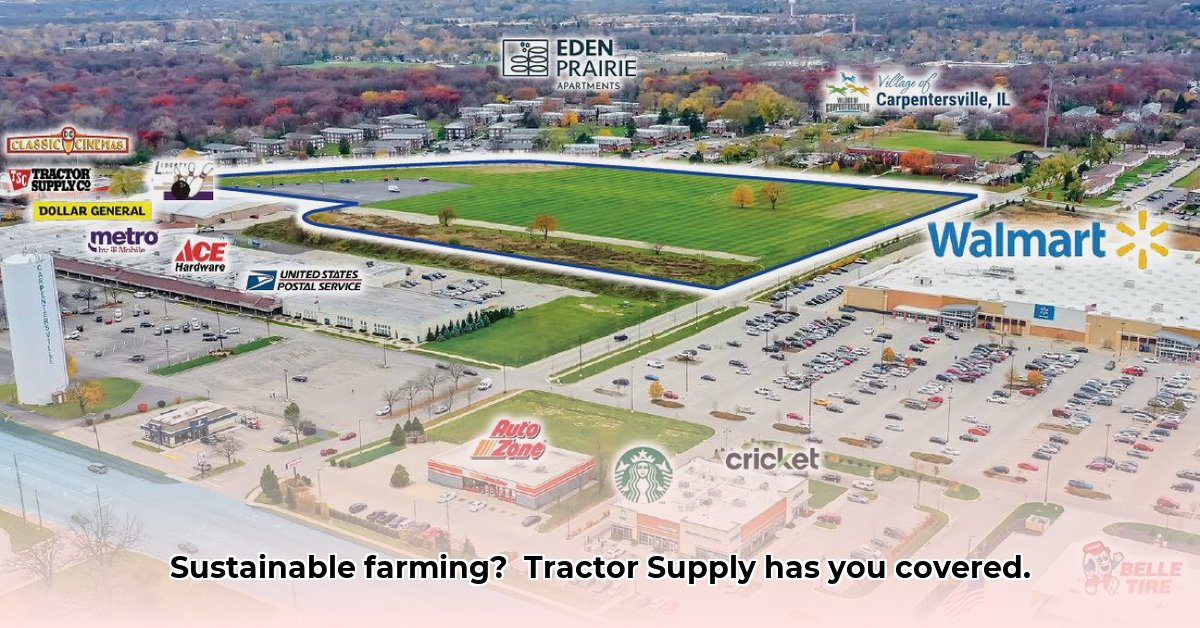
Tractor Supply's Carpentersville location, situated within the Meadowdale Shopping Center, offers convenient access to agricultural supplies for farmers in Carpentersville and surrounding areas including Fox River Grove, Elgin, and Hoffman Estates. For more information on Tractor Supply's offerings, visit their website. This article explores the potential role this store plays in supporting sustainable agricultural practices, acknowledging the limitations of currently available data.
Convenient Location and Easy Access for Busy Farmers
The store's location within the Meadowdale Shopping Center provides easy accessibility for farmers from multiple communities. Its extended operating hours – 8:00 am to 9:00 pm – cater to the demanding schedules of agricultural producers. This accessibility is a significant advantage for busy farmers needing quick access to supplies. But does convenient access translate to readily available sustainable agricultural supplies? That requires further investigation.
Tractor Supply and Sustainable Practices: Exploring the Potential
The question is: Could Tractor Supply Carpentersville significantly contribute to sustainable agriculture in the region? The potential certainly exists. A strong farming community surrounding the store indicates a market for environmentally friendly products. The store could support sustainable practices by offering a wider range of:
- Organic seeds and heirloom varieties
- Tools and equipment promoting conservation tillage (soil-preserving farming methods)
- Water-efficient irrigation systems and components
However, without comprehensive data on the store’s current inventory and sales, we cannot definitively assess their current contribution to sustainable agriculture. This requires further research.
Stakeholder Engagement: A Collaborative Approach
Several stakeholders could benefit from a stronger partnership between Tractor Supply and the local farming community focused on sustainable agriculture. These include:
- Farmers: Access to sustainable supplies could lead to reduced environmental impact, improved yields, and cost savings.
- Tractor Supply: Expanding sustainable offerings could enhance their brand image and attract a new customer base.
- Local Government: Collaboration could lead to incentives for farmers adopting sustainable practices, boosting the local economy.
- Environmental NGOs: Partnerships could enable educational outreach, accelerating the adoption of sustainable farming methods.
Opportunities for Future Research: Quantifying the Impact
To accurately gauge Tractor Supply’s role in promoting sustainable agriculture, further research is essential. This research could include:
- Farmer Surveys: Detailed surveys assessing farmers’ purchasing habits and needs regarding sustainable supplies. (This step would provide critical data on product demand and current practices.)
- Sales Data Analysis: Analysis of Tractor Supply's sales data (with permission) to identify trends in the demand for sustainable agricultural products. (This would offer quantitative evidence.)
- Interviews with Store Management: Interviews with store management to understand their current practices and future plans regarding sustainable product offerings. (This can provide insights into company policy and future intentions.)
These research methods would allow for a quantitative assessment of Tractor Supply's current and potential future contribution to sustainable agriculture in Carpentersville and the surrounding area.
Conclusion: Potential and the Need for Further Research
Tractor Supply Carpentersville possesses the potential to be a significant contributor to sustainable farming in the area due to its convenient location and accessibility. However, a definitive assessment requires further research to investigate its product offerings, gauge farmer demand through surveys, analyze sales data (if accessible), and understand the store's plans for the future. Only through careful investigation can we accurately measure its impact on the local agricultural community's transition to sustainable practices.